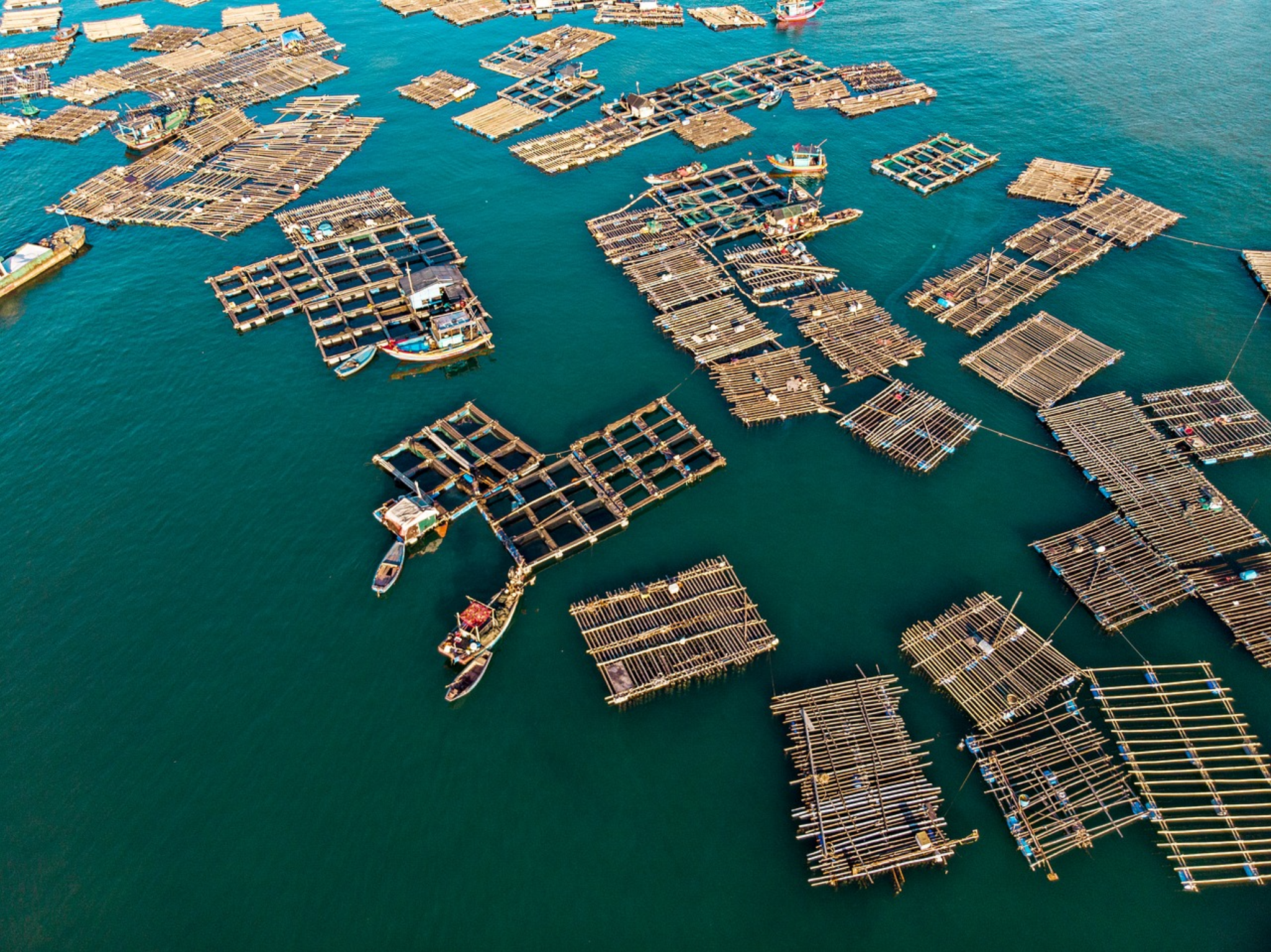
Marine Biota Breeding to Support Marine-Based Food Security
DOI:
https://doi.org/10.62012/agrocomplex.vi.30Keywords:
Marine Biota Breeding, Food Security, Aquaculture, Genetic Improvement, Disease Resistance, Biotechnology, Sustainable Marine SystemsAbstract
Marine-based food security has become a crucial strategy in addressing the growing global demand for food and increasing pressure on natural resources. Marine biota, including fish, shrimp, shellfish, and seaweed, possess significant potential as sustainable food sources. Marine biota breeding represents a strategic approach to improving genetic quality, productivity, and resilience to diseases, pests, and environmental stressors in marine ecosystems. This study aims to examine the role of marine biota breeding in supporting marine-based food security and to identify the methods and challenges associated with its implementation. The research employs a literature review approach by analyzing scientific journals, books, and research reports related to marine biota breeding, biotechnology, and marine aquaculture systems. A descriptive-analytical method is used to identify trends and developments in breeding technologies, ranging from conventional selection and hybridization to the application of modern biotechnology. The findings indicate that marine biota breeding can significantly enhance growth performance, disease resistance, and adaptability to changing marine environmental conditions. When supported by marine engineering technologies and sustainable management practices, breeding programs contribute to increased production efficiency and the long-term sustainability of marine-based food systems. Therefore, the integration of marine biota breeding, marine technology, and supportive policies is essential to strengthening marine-based food security in the future.
Downloads
References
L. S. Castillo et al., “Aquaculture isn’t always the answer: rethinking blue transitions through justice and community experience,” Glob. Environ. Chang., vol. 94, p. 103046, 2025, doi: https://doi.org/10.1016/j.gloenvcha.2025.103046.
Q. Zhang et al., “Toward smart aquaculture: A review of multimodal methods, datasets, and applications from the modality perspective,” Comput. Electron. Agric., vol. 240, p. 111227, 2026, doi: https://doi.org/10.1016/j.compag.2025.111227.
“Proceedings of the British Society of Animal Science,” Adv. Anim. Biosci., vol. 10, no. 1, pp. 1–284, 2019, doi: https://doi.org/10.1017/S2040470019000013.
A. Das et al., “Effects of climate change on food security and nutrition in India: A systematic review,” Curr. Res. Environ. Sustain., vol. 9, p. 100286, 2025, doi: https://doi.org/10.1016/j.crsust.2025.100286.
N. J. Rowan, “The role of digital technologies in supporting and improving fishery and aquaculture across the supply chain – Quo Vadis?,” Aquac. Fish., vol. 8, no. 4, pp. 365–374, 2023, doi: https://doi.org/10.1016/j.aaf.2022.06.003.
W. Diah, C. J. Marsal, W. Tamat, and A. J. K. Chowdhury, “Contamination prevention in ASEAN aquaculture: a review of prospective challenges and mitigations,” Desalin. Water Treat., vol. 315, pp. 523–537, 2023, doi: https://doi.org/10.5004/dwt.2023.30018.